The Fragrant Spider Orchid Plants
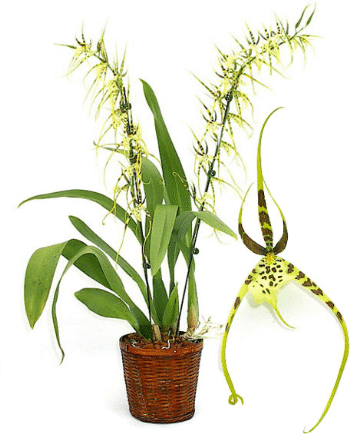
Spider Orchid Plants:
Brassias are often nicknamed “Spider Orchids”. These are fantastic, exotic looking orchids whose flowers are long and extended by long tails on the petals and the sepals.
These orchids from the genus, Brassia can be very fragrant. They are often in shades of green and brown and usually have a speckled lip. Some of the most striking ones have tails over 10 inches long and sometimes they are wavy or curly. These are striking and fun orchid flowers.
These orchids are named in honor of William Brass, a 19th-century British botanical illustrator. In the wild they come from the wet forests of tropical Central and South America. They have done very well in cultivation. They are also widely used to hybridize other genera as they have many interesting aspects to offer eevvmuch to offer. Many of this genus Brassia are pollinated by parasitic wasps, which normally lay their eggs on spiders. The patterns and structure of Brassia orchid plant resemble a spider in its web enough to encourage these wasps to lay their eggs in the plants' blossoms and in doing so pollinate them.
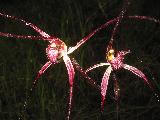
During the growth period of spider orchid plants, with the development of the psuedobulbs and inflorescence (flower spike), these plants need more water and humidity.
They need to be kept moist during the growth period but not wet. Do not allow them to completely dry out. Once the growth season is completed let it rest for 2-3 weeks. Water it about once a week at this time.
The humidity needs to be between 50 - 70%, a little higher than most orchids. And they also like good air circulation.
These are relatively easy to grow in a medium, bright light with intermediate temperatures. It can be bright diffuse light.A good potting medium for these orchids is a mixture of charcoal, perlite, medium bark and peat moss. However you don't really need to worry about re-potting for a couple of years.
These orchid plants are often quite fragrant. This fragrance coupled with their extraordinary flowers will give you a showcase plant for your orchid collection. When they are in bloom they are striking and elegant and you will be proud to show off to your friends and family.
If this information is helpful for growing spider orchids then try this page for information on other popular orchids.
Want some great Orchid growing tips and information?
Sign up for Orchidaceae Newsletter, it's free and generally out bi-monthly. Just use the sign up form above the navigation bar to the left side of this page.
Return to the top of the Spider Orchid Plants Page
Return to the Orchid Plus More Home Page
Home | Customer Service & Contact Information | Site Map | Security & Privacy


