Prune Your Orchids ?
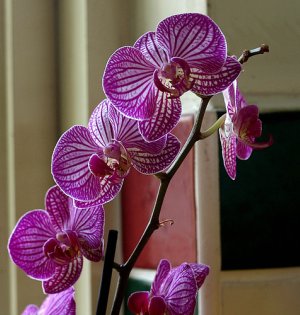
The flowers have all died so when should you prune your orchids or cut the flower stalk back and how far?
Dealing with the spent flower spikes is part of the basic care of orchids. Once the stalk turns yellow or brown and it is obvious that no blossoms will be produced. You can then prune your orchids to within an inch from where the blossom stalk originated on the plant. You can also cut it (preferably with a new one sided razor blade or a sterile cutting blade) there when it is green if you don't mind losing potential blossoms.
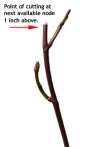
How to Prune Your Orchids
Another option to prune your orchids is to just remove the end of the blossom stalk to shorten the stalk, but retain enough so that it may bloom again. If you do this, cut it back to about 1/4 inch above a node (indicated by a small leaf-like bump clasping the stalk).
In general, this might produce another flower stalk a little sooner than if you cut the stem off completely. This method is more appropriate for Phalaenopsis orchid however it can be harder on the plant itself, forcing it to flower a little sooner. This method is NOT appropriate for the Dendrobiums that flower from the leafless canes. Some of the plants in this group will flower repeatedly from what appears to be a spent cane. If you cut this cane off the plant you will not see it rebloom. I have one in my kitchen that has re-bloomed on the same cane for 7 Years!
Want to learn more about how to care for orchids and get orchid tips from an Orchid Care Expert?
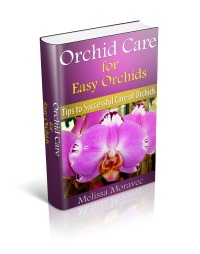
My current favorite e-book is the one I have recently completed. It is called Orchid Care for Easy Orchids Tips for Successful Care of Orchids. It is about 37 pages long and it is filled with a lot of great information on how to grow and bloom 5 kinds of "easy to grow" orchids. If you are interested in this book I now have it in the Amazon Bookstore as a Kindle edition.
It has to be purchased from Amazon only. I am not allowed to sell it in any form for at least 90 days. However, I believe if you are an Amazon Prime member it will be part of the library of your one free Kindle book a month.
I will try to put a link here to the place in the Amazon store where it is for sale. It costs $3.99.
If you do read it and like it, would you please consider giving me a review? When I sold it to my subscribers list last fall, several of those who purchased it wrote me to tell me how much they liked and appreciated "my pretty little book."
Pruning the spent flower spike should cause no harm to the plant. However, some orchids like Phalaenopsis will produce a new spike from the nodes on the old blossom stalk. Sometimes some plants will produce small baby plants (keikis)from these nodes. Keiki is the Hawaiian word for "baby". The new little plants are genetically identical to the parent plant (a clone).
These new little plants may eventually may be removed and potted on their own after they develop roots that are at least two inches long and have enough leaf structure to support the new little plant. Of course, some orchids do neither of these things.
In either case, it doesn't hurt the plant if you remove the old, dead flower spike.


